Categories
Dog Grooming

When to Bring Your Puppy for Dog Grooming and How to Prepare

Early experiences can go a long way in helping your puppy develop a positive relationship with professional services such as grooming, the vet, or any dog walking or dog sitting services you may need.

Let us look at when you should take your puppies for their first visit and what steps you should take to prepare them for that first visit.

What Age Should Your Pet Begin Visiting a Dog Grooming Salon?

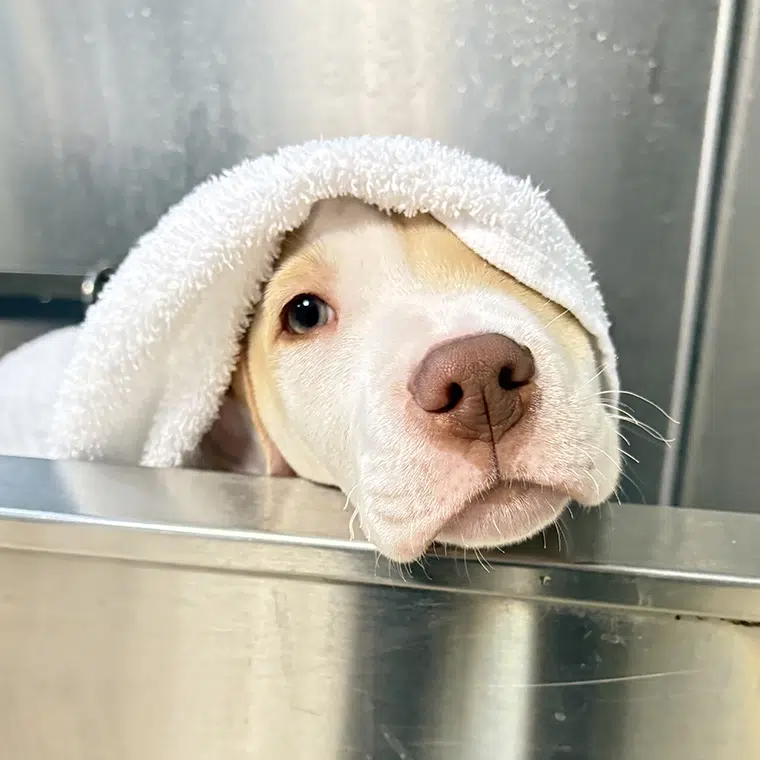
We recommend that your puppy’s first grooming session should be when they are around eight weeks old. However, we do not recommend giving the puppy a haircut until they are at least six months old. During this span of time, we will focus on getting your puppy accustomed to the noises and commotion of the salon as well as introduce them to the bathing procedures.

Moving forward your dog’s grooming frequency will depend on the dog’s breed or your preference. Our team recommends a routine session every four to eight weeks. For more information about grooming frequency once your pup transitions to an adult dog, please reference this blog.

How Can You Prepare for Your Puppy’s First Visit?

Here are some tips you can use to set the stage for a positive first puppy grooming experience:

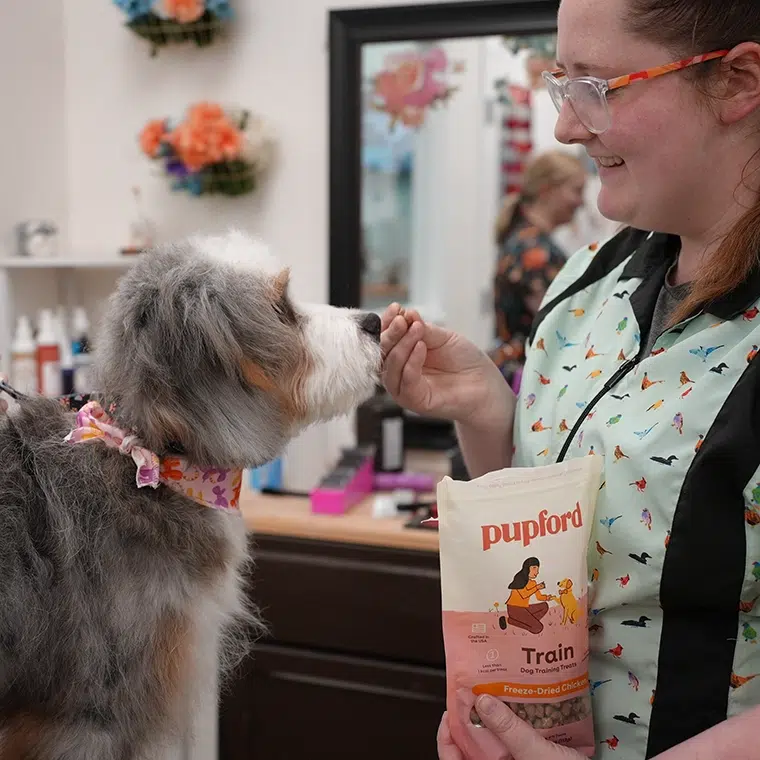
Visit a Grooming Salon Near You. No appointment is necessary. Take this time to let your puppy smell around and get comfortable with the salon environment. Let your puppy meet your groomer so that they get to know each other. Your groomer will offer you additional recommendations on preparing your puppy for their first official groom. Make sure you give the puppy a little treat at the salon so that they start linking the positive experience to a reward.

Daily Routine: Your groomer will be handling your puppy in many ways during their appointment. Completing these simple tasks daily gets your puppy familiar with these steps thus reducing their anxiety. Be sure to offer rewards after the puppy completes these tasks.

  • Play with their toenails. Wiggle and massage those nails. 
  • Gently hold your puppy’s tail. Get them used to the tail being held and encourage them to stand still while you do this.
  • Handle their ears, nose, mouth, and face. Touch them near their eyes. Now is a good time to teach them peek-a-boo. They should be comfortable having their face touched. Give them a gentle massage. They will love it.
  • Run your hands over your puppy. Especially up and down their legs. And under their bellies.
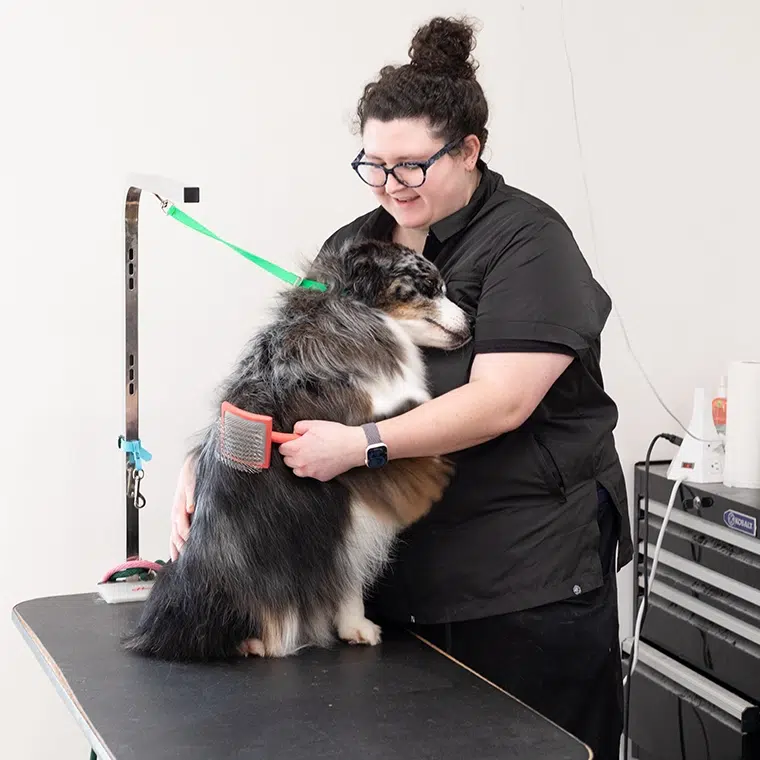
  • Gently brush your puppy. Start at the head and work towards the rear. Body, legs, face, and underbelly. Encourage them to stand still while you do this. Ask your groomer during your first visit which type of brush you should use.
  • Speak to them while performing the above steps. Tell them in a soft voice how good a boy or girl they are.

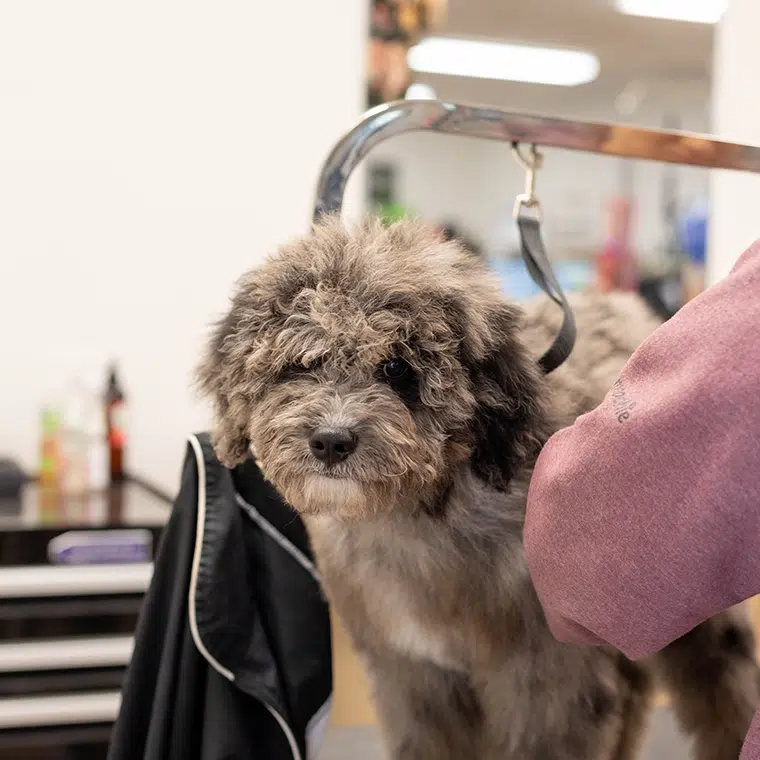
Tabletop Work: It is a good idea to do the above steps on a sturdy table. This gets them used to being up in the air. They will be placed on a grooming table in the dog grooming salon., so, it is key to get them familiar with being off the ground.

Car Rides: Get them comfortable getting in and out of a car. Now is a good time to start getting them used to command phrases like “get in the car” and “get out of the car.” 

Give Your Puppy a Bath: You can help get your puppy accustomed to the grooming experience by bathing them at home first. Be sure to use warm water and provide reassurance. But be sure to use shampoo and conditioner that is designed specifically for dogs. Human shampoos and conditioners have a different PH balance that can be harmful to a dog’s skin and hair. Please see our blog on skin care for more information regarding which shampoos to use. Or ask your groomer during your first visit. Do not rush it. If they are not comfortable with the bath, then do not push it.

Introduce Grooming Tools: Familiarize your puppy with dog grooming tools such as a slicker brush, rake, pin brush, bristle brush, comb, and nail clippers that are designed for dogs. This will help them become familiar with what to expect when they visit the salon and keep certain essential parts of the process from being a surprise for them. You should use these tools between grooming appointments to keep your puppy in tip-top shape.

Love and Patience: Through everything show them how much you care. Show them love and be patient. Some puppies pick up these tasks quickly. Others are slower. Do not get stressed if they do not pick up these tasks quickly. Just keep working at them and reward your puppy throughout the process.

Important Reminder

Now it is time for that first appointment. There are a couple of important steps that we need to remember.

  • Say goodbye to your pet by saying something like, “See you later, goodbye.” Do not make the goodbye emotional. Part of this training should be done at home. Do not make the exit and entrance emotional when entering or leaving your house. Do not pet your puppy until they are calm both at home and at the grooming salon. We do not want to encourage bad behaviors such as jumping up on you. And puppies can get super excited and pee on you.
  • Be specific with your groomer. Have pictures of specific haircuts you would like that you can show your groomer. Be sure to inform your groomer if your puppy is super sensitive in certain areas. This will help reduce the risk of being bitten and reduce the stress on your puppy.

Your Grooming Salon Near You 

At Smoochie Pooch, we are ready to welcome your new puppy for a positive first grooming experience. Please stop by and introduce yourself and your puppy to one of our certified groomers. They love making new puppy friends. We can help start the process of getting your puppy ready for their grooming experience.

Connect with us to make an appointment at one of our convenient locations or arrange for mobile grooming if you live in the designated area.

Categories
Blogs Preventions Skin Care

How Often Should I Groom My Dog?

One of the most common questions we hear in the grooming salon is: “How often should I get my dog groomed?”

Every dog should have their nails trimmed about every 4 weeks.

Professional dog grooming appointments should be scheduled every 4-6 weeks, though some breeds may be able to go 6-8 weeks between grooms.

Consistent professional grooming is equally important for all dogs, and your groomer is essential in keeping an eye on the health of your pet. Your pets typically see a veterinarian only once or twice a year, whereas your groomer should see your pet at least six times a year. Groomers check every aspect of your pet, and if you are consistent with the same groomer, they can help catch any new lumps and bumps or other potential health issues early on and help get you on the right path to resolve any concerns.

Grooming Dogs with Double Coats

Examples of Double-Coated Breeds:
  • Australian Shepherd

  • Golden Retriever

  • Corgi

  • Great Pyrenees

  • Border Collie

  • Collie

  • Shetland Sheepdog

  • Newfoundland

  • Bernese Mountain Dog

    Recommended grooming frequency: every 4–6 weeks
dog groom frequency double coated dog, grooming dogs with double coats

Double-coated dogs are often referred to as “shedding dogs,” but shedding can be significantly reduced with a consistent grooming routine. Regular professional grooming combined with brushing at home helps keep their coat healthy and manageable

Many people assume double-coated dogs have tough skin. In reality, they have very sensitive skin protected by a thick coat. Without regular grooming, these dogs are prone to matting and skin problems. While we have products and treatments that can help treat these skin issues, it is much easier to maintain healthy skin and coat than to fix damaged skin and coat.

Double coats consist of:

  • A dense, soft undercoat that insulates and regulates temperature

  • A longer, coarse, outer coat (guard hairs) that protects from sun, dirt, and weather

Dogs “blow” their undercoat in the warmer seasons. It’s especially important to professionally groom your pet during this time to ensure the undercoat is released instead of caught by the guard hairs, creating matting. If your dog develops mats, take them to a groomer to have them removed. Don’t try to cut mats out yourself, as they are often very close to the skin and you may accidentally injure your dog.

Shaving a double-coated dog may seem like a solution for shedding or summer heat, but it actually increases the risk of heatstroke and sunburn. The remaining undercoat helps trap cool air near the skin, and the double layers act as natural insulation and protection.

Grooming Dogs with Long Coats

Examples of Long-Coated Dogs:
  • Shih Tzu

  • Maltese

  • Havanese

  • Yorkshire Terrier

  • Poodle

  • Poodle mixes (doodles)

  • Cocker Spaniel

    Recommended grooming frequency:

    • Short haircut: every 4–6 weeks

    • Long or fluffy coat: every 2–4 weeks

long-coated dog grooming frequency, grooming dog with long coat

Long-coated dogs have higher grooming needs and can be styled in various ways, including full haircuts. Long coats grow continuously and require regular trimming to maintain healthy skin and coat. Longer styles also require more frequent bathing and consistent brushing at home to prevent matting.

The long coat types grow continuously and need to be trimmed periodically to maintain good health of the skin and coat. Matting or tangling of the coat can have multiple causes. Your pet’s coat may mat due to a coat change (puppies lose their soft, fluffy puppy coat and it gets caught in the new adult coat), pets wearing items (clothes, harnesses or collars), petting your dog consistently in the same location, and rolling around on the floor, furniture or outside. 

Common Causes of Matting

Matting can occur due to:

  • Coat changes (puppy coat transitioning to adult coat)

  • Clothing, harnesses, or collars

  • Repeated petting in the same areas

  • Rolling on furniture, floors, or outdoors

Static electricity often starts tangles, which worsen quickly without brushing. We recommend using a wire slicker brush and a metal comb at home.

If you find mats, schedule a professional grooming appointment as soon as possible. Cutting mats at home is unsafe and can easily lead to accidental cuts.

Grooming Dogs with Short Hair

Examples of Short-Haired Breeds:
  • Pug
  • Pit Bull
  • Labrador Retriever
  • Chihuahua
  • Beagle
  • Boston Terrier
  • Whippet

Recommended grooming frequency: every 6–8 weeks (or as needed)

dog grooming frequency short hair dogs, short-haired dog grooming frequency

Short-coated dogs can typically go longer between grooming appointments, but consistency still matters. These dogs can technically be groomed as often as weekly if needed—especially for skin care or odor control.

Why Short-Coated Dogs Still Need Grooming

Because their hair is short, natural oils on the skin rub off easily onto carpets, furniture, and other surfaces. These oils form a protective barrier that helps keep irritants and allergens out. When that barrier is compromised, dogs may develop skin issues or increased sensitivity.

Professional grooming products are designed to help restore and protect this natural barrier. If your dog is shedding excessively, ask your groomer about deshedding treatments or product recommendations. Excessive shedding may also point to internal factors such as nutrition.

Important to note: All dogs shed—even short-haired and shaved dogs.

Need Help Finding the Right Grooming Schedule?

Every dog is unique. If you’re unsure how often your dog should be groomed, our experienced groomers are happy to help.

Book an appointment or ask us at your next visit—we’ll create a grooming schedule that keeps your dog healthy, comfortable, and looking their best.

Categories
Blogs Dog Grooming Mobile Dog Grooming pet grooming Preventions Skin Care

Stop Dog Anxiety at the Groomers! Tips Every Pet Owner Should Know

Grooming sessions can be a source of stress and anxiety for many dogs, presenting challenges for both pet owners and groomers alike. Understanding the underlying causes of canine anxiety at the grooming salon is essential for effectively addressing and alleviating these concerns. By recognizing signs of distress and implementing proactive measures, pet owners and groomers play pivotal roles in creating a positive grooming experience for dogs. 

This blog explores why dogs may experience anxiety at the groomers, how professional groomers support anxious pets using modern, fear-conscious techniques, and how pet owners can help prepare and support their dogs before, during, and after grooming appointments.

Why do Dogs Get Anxiety at the Groomers? 

Entering a grooming salon can be overwhelming for dogs—especially those who are naturally shy, sensitive, or prone to anxiety. The sounds of barking, dryers, clippers, unfamiliar people, and new scents can quickly overstimulate a dog’s senses. For some pets, past negative experiences or lack of early exposure can intensify this response. Dogs with separation anxiety or previous stressful grooming encounters may associate the salon with discomfort or fear.

Another important and often misunderstood factor is emotional transmission between dogs and their owners. Dogs are highly attuned to human body language, tone, and emotional states. While pet owners naturally want to comfort their dogs at drop-off, heightened worry or prolonged goodbyes can unintentionally signal that something is wrong. This doesn’t mean owners cause anxiety—but rather that dogs may mirror the emotions they sense. Calm, confident transitions can help set a more positive tone for the grooming experience.

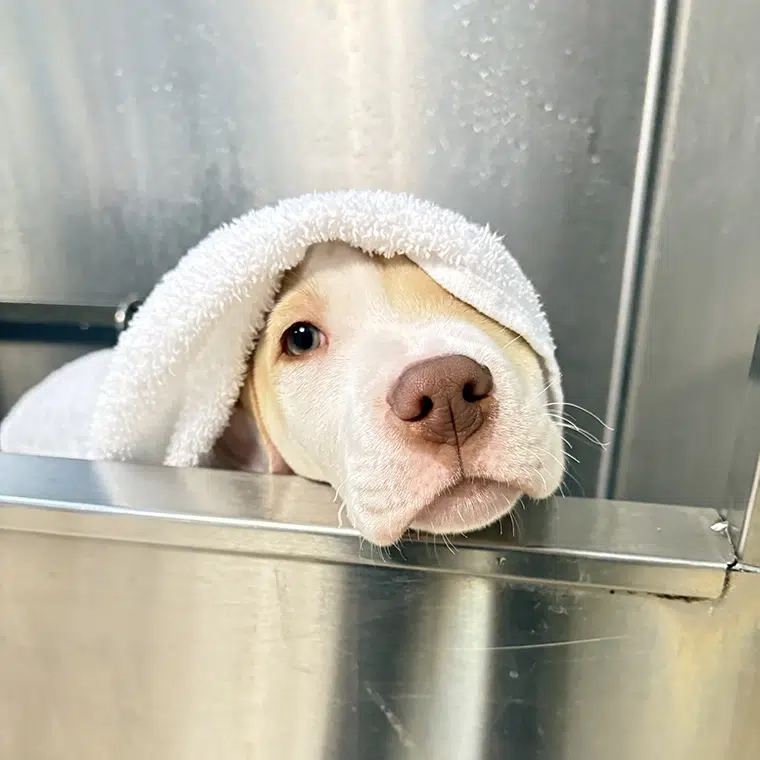
dog at the groomers

The Signs of Dog Anxiety at the Groomers 

Dogs communicate stress in a variety of ways, ranging from subtle signals to more obvious behaviors. Common signs of grooming-related anxiety include:

  • Showing the whites of the eyes

  • Reddening of the skin

  • Frequent yawning or lip licking

  • Panting or rapid breathing

  • Shaking or trembling

  • Excessive drooling

  • Whining, barking, or growling

  • Attempts to flee or hide

  • Accidents (urinating or defecating)

In more severe cases, dogs may escalate to defensive behaviors such as snapping or biting when they feel overwhelmed. Recognizing these signs early allows groomers and owners to intervene before anxiety intensifies.

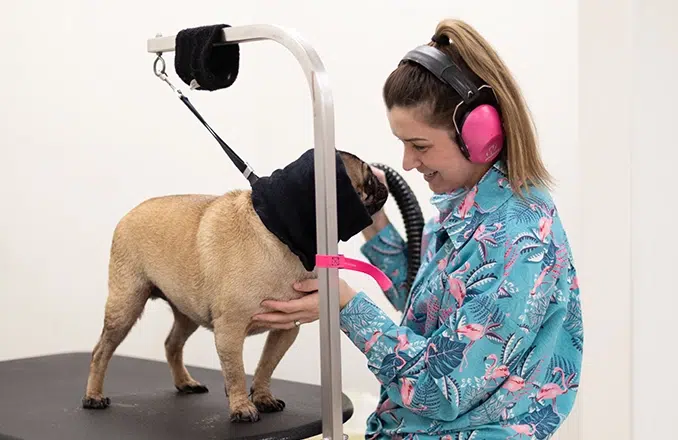
wrapping a dog like a burrito

How Groomers Handle Dogs with Anxiety 

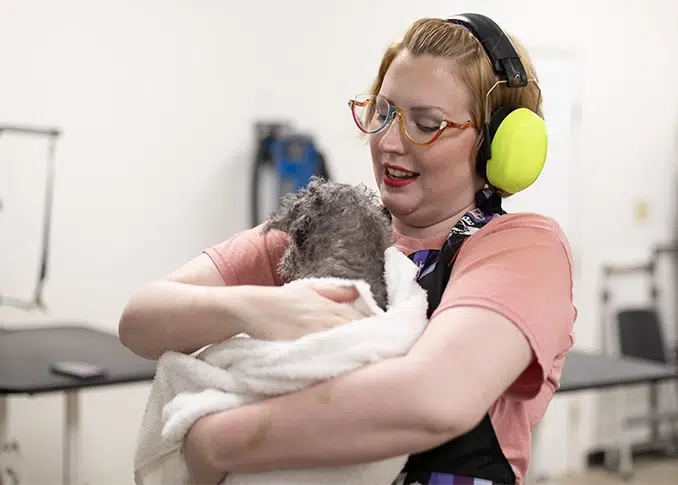
Professional groomers diligently monitor a dog’s behavior to discern any signs of stress during grooming sessions. They offer breaks when needed and use gentle techniques like petting and soft talking to calm the dog to create a reassuring environment. In instances where the dog’s stress persists or escalates, groomers promptly call the pet’s owners to discuss ending the grooming session and attempting to complete it a different day.

The dog’s comfort and safety are the priority in these situations. The groomer tailors the experience to the individual animal’s needs and temperament. They adhere to a pace that aligns with the dog’s tolerance level, refraining from pushing beyond what the dog can handle. This creates a positive grooming experience that prioritizes the dog’s emotional well-being alongside its physical appearance. 

using happy hoodies when drying dogs

How Pet Owners can Help with Dog Anxiety at the Groomers 

Desensitization and Positive Exposure

Gradual, consistent exposure is one of the most effective ways to reduce grooming anxiety. Incorporating brief, positive visits to the grooming salon—such as stopping in to say hello, receive treats, or explore the space—can help dogs build positive associations without the pressure of a full groom.

At home, owners can gently acclimate dogs to grooming-related handling by:

  • Regularly touching paws, ears, and faces

  • Practicing gentle brushing

  • Introducing grooming tools slowly and allowing the dog to sniff them

  • Using a blow dryer on a low, cool setting from a distance

Always keep sessions short, calm, and reward-based. Ending each practice with praise or treats reinforces positive associations and builds confidence.

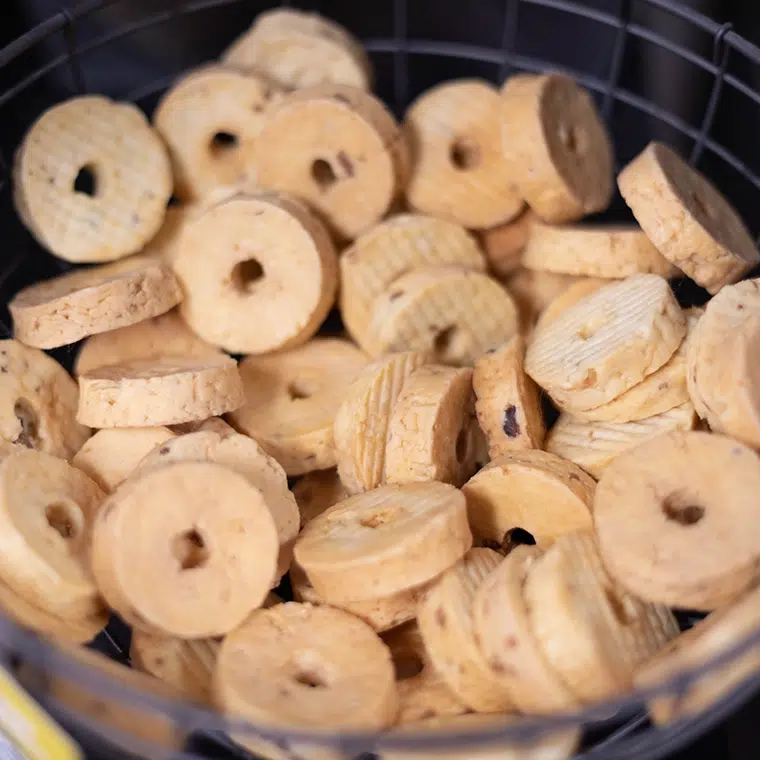
bowl of dog treats

Frequent Grooming Appointments

Maintaining a consistent grooming appointment schedule fosters the relationship between your dog and their groomer while ensuring familiarity with the grooming process. Extended intervals between appointments may lead to regression in a dog’s comfort level with grooming, potentially bringing back the anxiety. Moreover, infrequent grooming sessions can contribute to a deteriorated coat condition, making brushing, cleaning and styling more challenging during the session. This prolonged and demanding grooming process may rekindle your dog’s anxiety and reintroduce negative associations with the grooming salon. To prevent such challenges, we recommend booking grooming appointments every 4-6 weeks, taking into account the specific breed and coat type of your dog. 

scheduling grooming appointments, dog spa near me

Introduce Puppies to Grooming Early 

Early exposure to grooming is crucial for puppies, as it lays the foundation for a positive grooming experience in the future. It’s advisable to introduce puppies to the grooming salon as soon as possible to familiarize them with the environment and the grooming process. At Smoochie Pooch, we’ve noticed a measurable difference in the anxiety between dogs who begin grooming early in life, as these early experiences help puppies become comfortable with grooming procedures and reduce potential anxiety or fear associated with future visits. Ask us about our Puppy Package to begin acclimating your pet to the process and help make it a success!

Exercise Before Grooming Appointment 

High-energy breeds or dogs prone to anxiety can benefit significantly from exercise before grooming appointments. Prior to the appointment, engage your pooch in activities such as a long walk or energetic game of fetch in the backyard. These exercises allow them to expend excess energy and stimulate their senses, which can help calm them down before the trip to the local dog groomers. Whether your dog is naturally energetic or tends to be anxious, incorporating exercise into their routine before grooming appointments can promote a more relaxed and cooperative demeanor during the grooming process. 

dog getting exercise, smoochie pooch grooming

Medications and CBD for Anxious Dogs 

Medications designed to calm dogs during grooming sessions are available. If your dog experiences extreme anxiety or fear during grooming, you may want to consult your vet to explore medical options to help them relax (though not put them to sleep). While various anti-anxiety medications are effective for dogs, not every medication is suitable for every dog. Always seek guidance from your veterinarian before administering any medications to your dog.

CBD oil and supplements induce a calming effect, decrease aggression and support a more balanced behavior in pets who experience low-to-moderate anxiety levels at the groomer. Their suitability varies depending on individual pets, however, so what may work well for one pet may not do the trick for another. CBD also has the ability to wear off over time, so keep in mind that a pet’s anxiety levels may fluctuate during the grooming process as a result.

Our recommendation is to ensure you understand how your pet handles CBD before trying the supplement during a grooming session. Doing this allows you to understand how the CBD affects your pet as well as how long the effects last. Always test out CBD at home before bringing your pet to the groomers on a new supplement or medication. Learn more in our blog about CBD for dogs. 

Consulting with your veterinarian can help determine the most appropriate approach for addressing your dog’s specific needs while ensuring their well-being. While medications may be needed or helpful for some pets, we want to stress the importance of behavioral training, desensitization and frequent, early exposure to grooming to help make the process a success and utilizing medications under the guidance of your veterinarian only if your pet still exudes excessive anxiety.

Positive Reinforcement After the Grooming Session 

The moment your dog is released to you after their grooming session presents an ideal opportunity to reinforce positive associations with the experience. Showering them with love, affection and rewards, such as treats or a favorite toy, can help solidify their confidence and contentment. 

dog with toys,

Implementing Support Strategy 

Desensitization techniques, frequent grooming appointments and positive reinforcement strategies can help ease anxiety and promote a sense of calm during grooming sessions for your dog. By prioritizing the emotional well-being of your dog and fostering positive associations with the grooming experience, you can ensure that trips to the pet salon are a success. Through collaboration, pet owners and groomers can create a grooming environment that is both stress-free and supportive to your beloved canine companion. 

Categories
Additional Services Blogs Dog Grooming Mobile Dog Grooming pet grooming Skin Care

How to Communicate to Your Groomer What Kind of Haircut You Want For Your Dog

Communicating your dog’s haircut preferences to a groomer can feel frustrating—but clearly explaining your vision is key to a successful grooming experience. Whether you’ve moved to a new area, your regular groomer has retired, you’re a new dog owner, or you’re caring for a breed that requires regular haircuts, learning how to communicate effectively with your groomer makes all the difference.

By following the tips below, you’ll feel more confident sharing your expectations and working with your groomer to achieve the best possible results for your dog.

Research Before Your Appointment

Before taking your dog to the groomer, it’s important to understand their coat type—whether it’s curly, wiry, straight, silky, or double-coated. Each coat texture (and breed) requires different grooming techniques and supports different styles.

Take time to:

  • Research haircut options appropriate for your dog’s coat type

  • Learn basic maintenance needs for that style

  • Compare grooming styles between pet trims and show cuts

It’s also helpful to research groomers in your area. Browse their social media, review photos of past work, and read customer reviews to see if their grooming style aligns with your preferences.

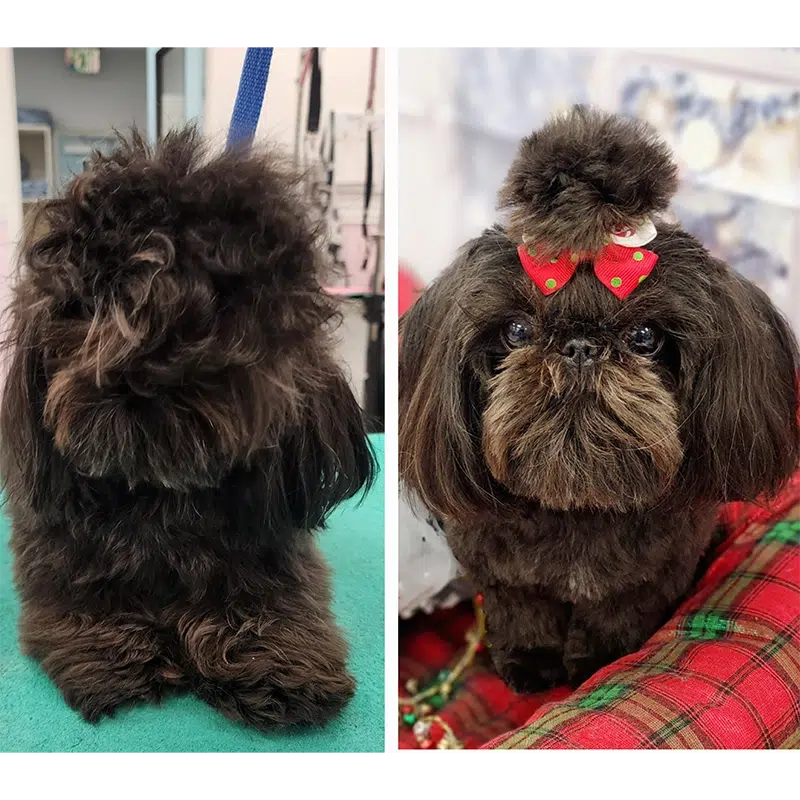
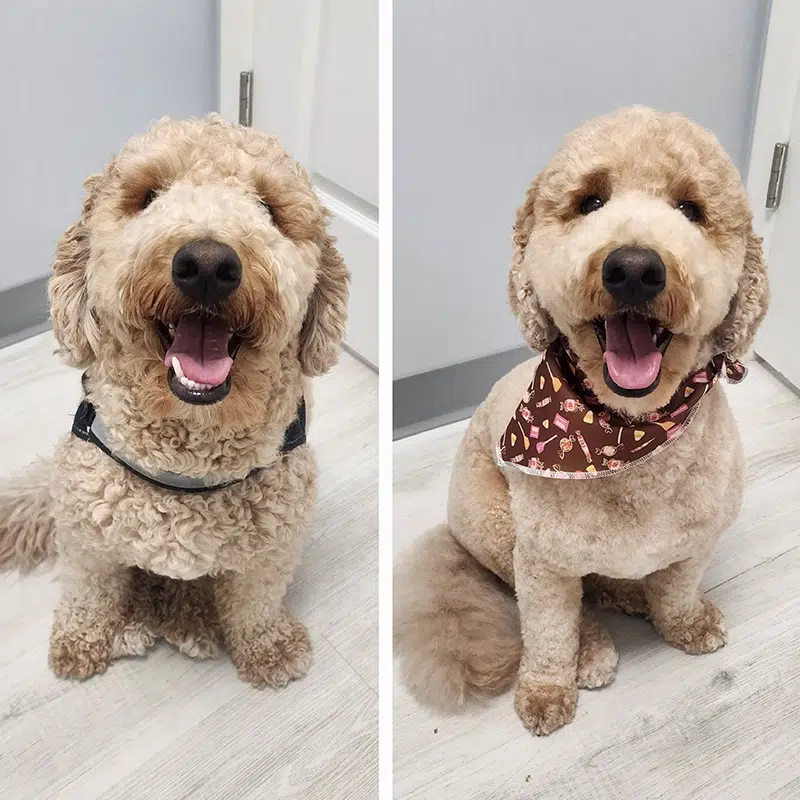
Before and after transformation of dog. topknot
before and after dog transformation

Find Photos and Take Notes

Photos are one of the best communication tools you can bring to a grooming appointment. Save pictures of dogs with similar breeds, coat textures, and body shapes to your own dog.

When reviewing photos with your groomer:

  • Discuss each body area (face, ears, body, legs, tail, feet)

  • Note desired length, shape, and fullness

  • Clarify what you like—and what you don’t

A great tip is to take a photo of your dog after a grooming appointment you loved. This becomes an excellent reference for future visits, especially if you change groomers or need a reminder of a previous style.

takes pictures of your dog's groom, mobile dog grooming near me

Be Specific About What You Want 

Vague terms like “short,” “trim,” or “puppy cut” can mean very different things to different people. To avoid misunderstandings, specificity is essential.

Instead:

  • Define exact lengths when possible (for example, half an inch vs. one and a half inches)

  • Describe how much hair you want left, not just removed

  • Specify preferences for individual areas like the face, ears, tail, and feet

Ask your groomer to explain guard lengths and help you choose what best matches your vision. Reference photos paired with clear descriptions give your groomer the direction they need to deliver the look you want.

communicate to your groomer, dog nail trimming near me

Trust Your Groomer’s Expertise

Your groomer is a trained professional and an important partner in your dog’s care. Sometimes pet parents apply human assumptions to grooming—such as believing shorter hair is always cooler in summer or that a fuller coat is healthier, even when mats are present.

Be open to your groomer’s recommendations. They consider:

  • Coat health

  • Skin condition

  • Comfort and safety

  • Your dog’s behavior and tolerance

This is also a great time to ask about additional services or grooming packages. If nail trims, ear cleaning, or deshedding treatments are not your favorite tasks at home, ask whether they’re included or available as add-ons.

experienced groomers near me, pet salon near me

Set Your Groomer Up for Success 

Always inform your groomer ahead of time about:

  • Health conditions

  • Skin sensitivities

  • Behavioral concerns

  • Areas your dog dislikes being handled

This information allows the groomer to adjust techniques, take extra care where needed, and create a calmer, safer grooming experience. A comfortable dog is easier to groom and more likely to achieve the desired result.

Keep Expectations Realistic

It’s important to uphold a sense of realism when discussing grooming expectations for your dog. Certain breeds and individual characteristics may limit the achievable styles. For instance, a golden retriever cannot realistically sport a poodle-style cut. When providing reference photos, ensure they depict dogs of the same breed or at least similar breeds with comparable hair textures. Attempting to compare vastly different breeds or hair types can lead to unachievable expectations, as the desired look may not translate effectively across different breeds or coat textures. 

Consistency in at-home brushing and dog behavior also play key roles in determining the potential grooming outcome. Dogs that aren’t regularly brushed may require shorter cuts due to matting issues. Additionally, dogs with a tendency to wiggle or become restless may not tolerate intricate grooming styles, necessitating simpler cuts. 

different style haircuts for different dog breeds, bathing dog near me

Partnership with Your Groomer 

Successful grooming is a team effort. View your groomer as a partner—not just a service provider. Clear communication, realistic expectations, consistent at-home care, and trust in professional expertise all work together to keep your dog healthy, comfortable, and looking their best.

Have questions about your dog’s haircut or grooming routine? Our experienced groomers are happy to help—just ask at your next visit!

Categories
Blogs Dog Grooming pet grooming Preventions Skin Care

Untangling the Knots: Understanding Matting in Dogs, Its Harmful Effects and Proactive Prevention Tips

We’ve heard it many times before: “They shaved my pet! I asked for a trim!”

While that reaction is completely understandable, groomers are not eager to shave dogs unnecessarily. Our goal is always to help your pet look and feel their best. Even more importantly, we want to protect your pet’s comfort, health, and safety—especially when painful matting is involved.

This blog is designed to bridge the gap between a groomer’s nightmare (discovering severe matting) and a pet parent’s nightmare (learning their dog must be shaved). With proactive at-home care and consistent professional grooming, matting is often preventable.

Read on to learn what matting is, why it’s harmful, and how you can help prevent it.

What are Mats and How are They Formed? 

Mats are essentially masses of hair that intertwine into clumps, wrapping around themselves and trapping dead fur. They are the result of friction and shedding. Without daily care, mats grow larger and tighter, causing constant pulling on the dog’s skin. This discomfort and pain often prompts behaviors like licking, itching or biting. These actions can potentially result in hot spots, skin infections and bruising forming on the dog’s skin. Breeds with long, silky coats, curly hair or a mixture of both are more prone to matting. 

Matting in dogs tends to occur more frequently during seasonal changes when a dog’s coat transitions to adapt to upcoming warm or cold weather. Also, activities like swimming can almost guarantee matting if a pet’s coat is not tended to afterward. 

what are mats, pet care for specific breeds

The Risks of Grooming a Matted Dog 

Brushing out mats can be a time-consuming and distressing process. Each brushstroke pulls on the dog’s skin, potentially leading to issues like skin tears, brush burn, bruising and even bleeding. Pet groomers aim to make your pet as comfortable as possible when receiving care.

Even when shaving mats, there are inherent risks to consider. Dense matting in dogs can lead to the canine’s skin becoming loose due to the weight and constant pulling of the mats. This can pose a challenge for groomers. To effectively remove tangled hair, pet groomers must work very closely to the skin. Despite the utmost care taken by the pet stylist, there is still a possibility of a dog accidentally getting nicked during the process.

dog mats, dog grooming near me, dog grooming

“Humanity Before Vanity” 

If brushing out mats would cause pain or damage, groomers will shave the coat instead to provide immediate relief. This decision is always made with your dog’s well-being as the top priority.

Most matting is discovered during the initial assessment at check-in, and pet parents are informed right away. Occasionally, matting isn’t fully visible until the grooming process has started. In these cases, our team will contact you before proceeding.

Transparency is important to us—we never want a pet parent to feel surprised at pickup.

dogs getting mats shaved, pet grooming near me, pet groomers near me

How Can A Pet Owner Prevent Mats? 

Consistent at-home care combined with professional grooming is the best defense against matting.

Schedule Consistent Grooming Appointments 

A dog’s maintenance needs are based on the length and thickness of their fur. To ensure consistent care, it’s crucial to schedule appointments with your groomers based on the recommended frequency for your specific pet. The goal is to avoid resorting to the complete shaving of your dog’s coat at each session due to insufficient grooming practices. 

  • Most dogs: every 4–6 weeks

  • Curly, thick, or easily matted coats: every 2–4 weeks

  • Short-coated breeds: every 6–8 weeks

Regular grooming prevents mats from becoming severe and helps avoid the need for full shaves due to neglect.

dog getting groomed, pet salon, groomers, smoochie pooch, matting in dogs

Brush Areas of High Priority 

When it comes to brushing your dog, it’s common for pet owners to concentrate on the back and top of the head, but these areas are actually less prone to matting and require less brushing. For optimal mat prevention, redirect your brushing efforts to focus on the areas most prone to developing mats. 

  • Under and behind the ears
  • Front of the chest
  • Legs and armpits
  • Base of the tail
  • Neck and collar area

These regions are most susceptible to matting and should be attended to first before addressing other areas. Implement daily at-home care using appropriate brushes between grooming visits. To learn more about brushing a dog correctly, read this blog. 

areas of brushing priority, dog groom near me

Brushing Dogs After They Get Wet  

A vital grooming tip is to brush your dog’s hair after it gets wet, as moisture dramatically increases the risk of matting. After bathing, swimming, or rain exposure, brush your dog’s coat before it fully dries. Brushing damp fur prevents tangles from tightening, removes excess moisture, and encourages even drying. This simple habit can significantly reduce mat formation.

The Right Brushes to Use to Prevent Matting in Dogs 

Slicker Brush 

A slicker brush is one of the most versatile grooming tools. Its fine, short wires help detangle hair, prevent mat formation, and remove loose fur.

It works well for double, curly, and wire coats. Always brush in the direction of hair growth and avoid over-brushing to prevent irritation or brush burn.

slicker brush, matted fur, local dog groomers

Metal comb 

A metal comb is ideal for checking your work and addressing smaller, tighter tangles—especially near the skin.

Use it after the slicker brush to ensure no hidden mats remain. If the comb does not glide easily through the coat, additional attention is needed.

metal comb, fine-tooth comb for dog, dog matted hair

Pin Rake

Pin rakes are designed specifically for double-coated breeds. They remove excess undercoat, reduce shedding, and help prevent mat buildup.

Use gentle pressure and follow the natural direction of coat growth to avoid skin irritation.

pin rake, dog salon near me

Know When to Stop and Call a Professional

If a slicker brush or comb cannot move through the coat without resistance, stop brushing. Forcing tools through mats can hurt your dog.

This is the right time to schedule a professional grooming appointment rather than risking injury at home.

checking hair on comb, dog groom near me

Make a Commitment to Grooming 

Dedicated grooming for your dog’s coat demonstrates your commitment to their well-being. Create an effective grooming plan by integrating the appropriate brushes, employing correct techniques and scheduling timely grooming appointments based on your dog’s specific coat type. These tips are key to preventing painful matting and ensuring your canine companion’s comfort during the grooming process. 

Have questions about matting or your dog’s coat? Our experienced groomers are happy to help—just ask at your next visit or book an appointment today.